When Standard Stainless Steel Falls Short
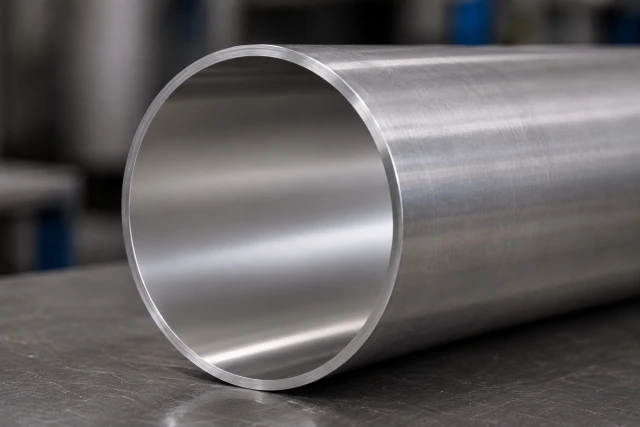
Duplex stainless steel is often used when standard stainless steel grades, such as 316 stainless steel, are no longer sufficient. The material combines high corrosion resistance with greater mechanical strength. In addition, the nickel content is lower, which makes duplex stainless steel economically attractive in many applications. This combination makes duplex a logical choice within the food industry, where both hygiene and durability are essential.
Duplex stainless steel is a type of stainless steel with a dual-phase microstructure: it consists of approximately 50% ferrite and 50% austenite. This combination explains the name “duplex” and is responsible for its specific material properties.
The most commonly used grade is 1.4462. This grade is widely applied because it is readily available, technically versatile and relatively stable in price compared to other duplex variants.
The key properties, viewed from a practical perspective:
higher strength than 316 stainless steel
improved corrosion resistance, especially against stress corrosion cracking
lower nickel content, resulting in less price fluctuation
good weldability, provided heat input remains controlled
This combination makes the material highly suitable for demanding applications, but also more challenging to machine.
The advantages of duplex come with a downside. Duplex stainless steel is noticeably more difficult to machine than standard stainless steel grades.
The surface is often tougher and contains more irregularities. As a result, grinding and polishing stainless steel simply requires more time, control and process stability. This becomes especially challenging when working on internal surfaces, where accessibility is limited and complexity increases quickly.
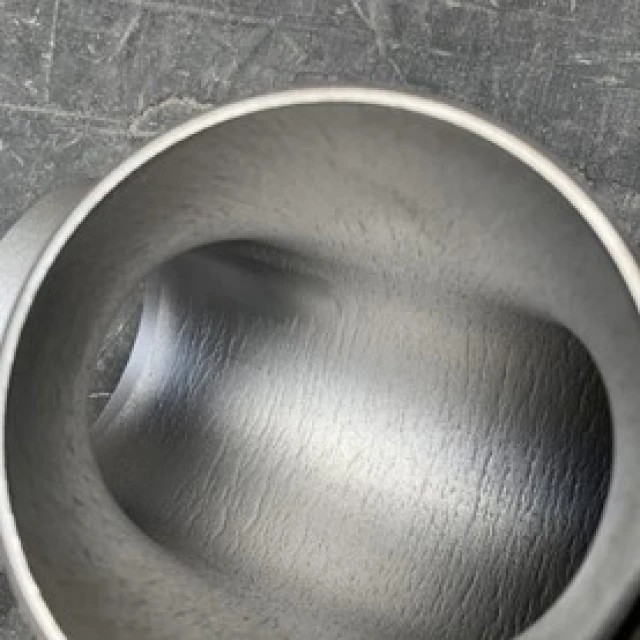
Within the food industry, a surface roughness of Ra < 0.8 is often required. This is not a cosmetic requirement, but a functional one. A smoother surface is easier to clean, reduces product adhesion and lowers the risk of bacterial growth.
The quality of the stainless steel surface finish therefore has a direct impact on process reliability.
Achieving this roughness value on the inside of pipes, bends and T-pieces requires a controlled approach. Different diameters, variations in initial surface roughness and limited accessibility make this technically demanding. With duplex stainless steel, the material hardness adds another level of complexity.
By internally grinding components to the required Ra value before installation, a consistent base finish is created. In practice, this means that during assembly only the weld seams still need to be finished.
This results in:
less corrective work on-site
a more consistent final finish
better control over overall surface quality
Especially in food-grade piping systems, this is not a luxury, but a necessity.
Heat control plays an important role when machining duplex stainless steel. During grinding, polishing and welding, temperatures must remain controlled. If the material becomes locally overheated (roughly above 250 °C / 482 °F), structural changes can occur that negatively affect corrosion resistance.
This means that stainless steel finishing is not only about achieving a specific Ra value, but also about controlling the process itself. Important factors include:
controlled pressure and speed
correct tooling selection
controlled heat input
This is exactly where experience makes the difference.
The processed pipes, bends and T-pieces are used in piping systems where the complete internal surface must comply with strict hygienic standards. A consistent surface roughness across all components prevents contamination, improves cleanability and reduces process risks.
By applying the correct stainless steel surface treatment at an early stage, the complete system becomes more reliable and easier to control.
Duplex stainless steel is a strong and corrosion-resistant material widely used in demanding environments such as the food industry. At the same time, it places higher demands on the machining and finishing process.
Especially when internally grinding and polishing stainless steel to Ra < 0.8, a controlled and experienced approach is essential. When executed correctly from the start, it creates a solid foundation for a hygienic and reliable end result.
For technical alignment or a specific application, it is worthwhile to assess the material, requirements and feasibility early in the process.
